Production observability for teams shipping today with autonomous coding agents.
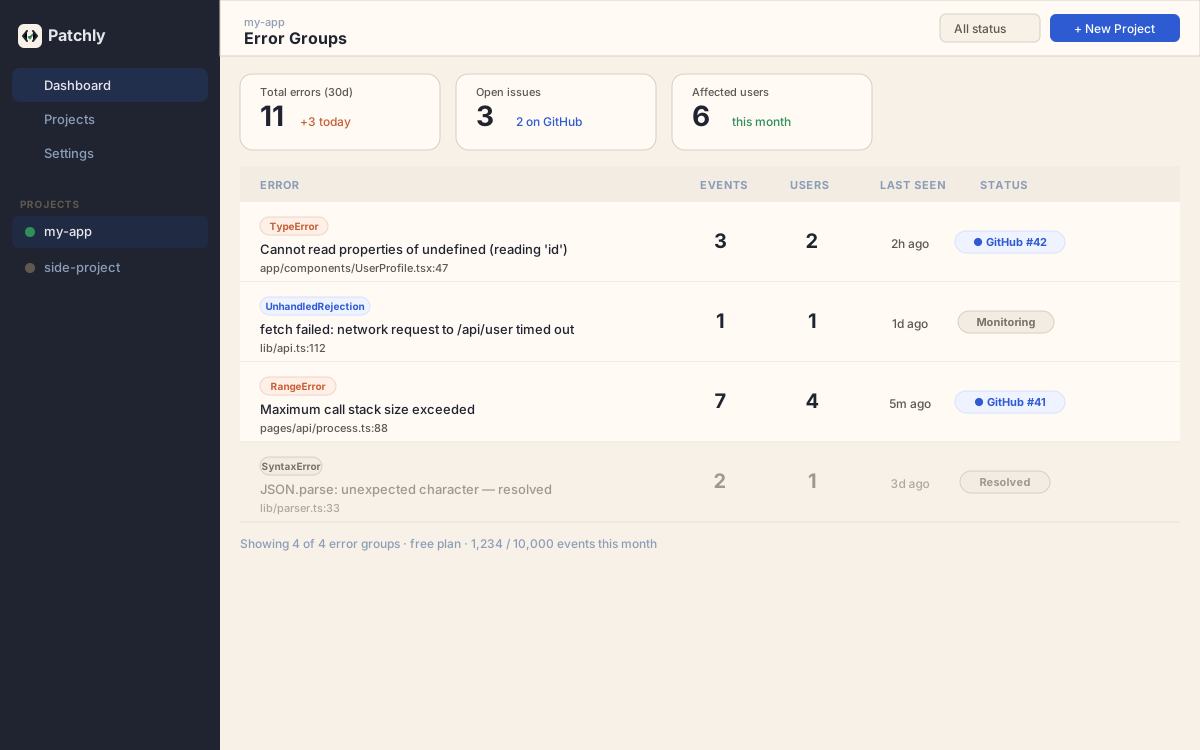
Patchly catches runtime failures, opens the source-rich GitHub issue, and gives your agent enough context to propose the repair.
One DSN
Browser and server capture
GitHub-native
Issues and follow-up comments
Source-aware
Readable stack traces and repair notes
How it works
Your app
Runtime error captured
The SDK records the exception, release, URL, user, and breadcrumbs.
Patchly
Similar errors grouped
Repeat events are deduplicated into one failure group with a clear threshold.
GitHub
Issue opened automatically
Patchly posts the stack trace, affected users, breadcrumbs, and release SHA.
Patchly AI
Source context gathered
The repair pipeline reads the issue and relevant repo files before drafting advice.
GitHub
Repair note lands on the issue
Your agent gets a concrete suggested fix with file names and line-level context.
Why Patchly fits
Error tracking for teams that fix in GitHub.
Production bugs rarely arrive as tidy tickets. Patchly helps turn messy runtime behavior into a concrete engineering handoff.
Error tracking for AI-assisted teams
Runtime failures are captured, grouped, and kept close to the source context your agent needs.
GitHub-native triage
Patchly fits the tools your team already uses by opening the issue first and keeping the follow-up inside GitHub.
Repair notes, not just alerts
The model sees stack traces, source maps, and repository matches before it suggests what likely broke and where to start.
Workflow
Capture, issue, repair. One loop from runtime failure to fix.
Capture
Watch production without drowning in noise.
Patchly captures runtime failures, keeps useful context, and groups repeated breakages before they become scattered alerts.
Issue
Turn signal into a GitHub-ready task.
When the same failure keeps landing, Patchly opens the issue with counts, affected users, stack traces, and release context.
Repair
Add repair notes backed by source context.
Source maps, repository search, and stack frames give the model enough context to suggest a concrete next step instead of generic advice.
See it in action
From production crash to GitHub patch.
Patchly groups repeated errors, opens the GitHub issue automatically, and posts an AI-generated fix comment — so your next session starts with a concrete task, not a mystery.
![GitHub issue opened by patchly[bot] showing the TypeError stack trace and an AI-generated repair note with a suggested code diff](/screenshots/screenshot-github-issue.svg)
Languages
TypeScript first. Python next.
Patchly is TypeScript and JavaScript first today because production teams are shipping agent-assisted work in stacks like Next.js, React, server actions, edge functions, and shared SDK code.
GitHub Octoverse 2025 reported TypeScript as the #1 language on GitHub by monthly contributors. Python support is planned next, but it is not available in Patchly today.
Install
Paste the DSN. Connect GitHub. Keep shipping.
npm install patchly

import { init } from "patchly";

init({
  dsn: process.env.NEXT_PUBLIC_PATCHLY_DSN,
  release: process.env.VERCEL_GIT_COMMIT_SHA
});